
17 Jun 2026 | 16:15 | London | by Chris Borland
In a challenging capital allocation environment, the logistics specialist has been on the front foot with several new mandates.
Marchmont Investment Management, a specialist operator in the industrial and logistics space, has an extensive track record in successfully aggregating portfolios and has completed over 100 transactions totalling more than £1.5bn.
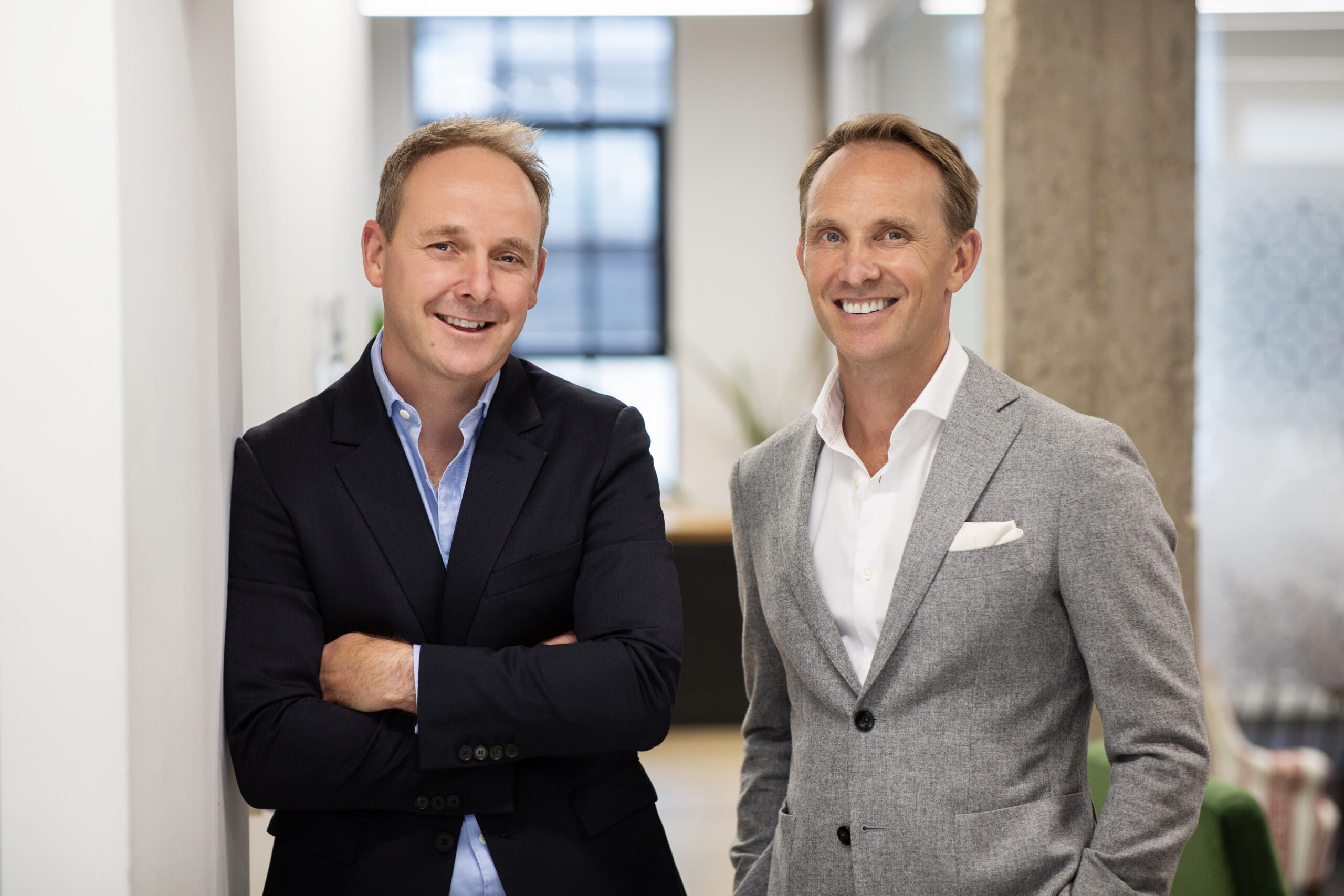
Founder Tim Lumsdon and partner Cameron Fraser are highly regarded operators in the market with an eye for a deal.
With a 15-year track record of origination and execution, Marchmont has recently successfully secured new mandates in a tough capital raising and deployment environment.
Last year, Marchmont and capital partner Invesco established Space Industrial with the objective of building a £500m+ UK multi-let industrial platform. Marchmont continues to manage several live industrial-focused investment strategies with institutional partners.
Lumsdon and Fraser talked Green Street News through how the business has evolved over recent years, what it is investing in and why capital providers work with them.
How would you summarise Marchmont IM now compared to what you set up 15 years ago?
Tim Lumsdon (TL): Materially different in one sense, but ultimately, we’re still value-add investors working on behalf of trusted capital partners. Initially the origin of the capital was family offices and high-net-worth individuals. The business has evolved and we are now working with highly sophisticated global capital partners such as Invesco, NW1 Partners, ICG and Pictet, which account for around 80% of our business.
“The business has evolved and we are now working with highly sophisticated global capital partners such as Invesco, NW1 Partners, ICG and Pictet, which account for around 80% of our business”
TIM LUMSDON
Our main premise hasn’t changed in terms of identifying and extracting value. Historically we were sector agnostic, however Marchmont is now very focused on the industrial market via our multi-let industrial and industrial open storage (IOS) platforms.
Cameron Fraser (CF): The business is now more disciplined and almost solely focused on the logistics market, with three deeply intertwined threads – investment management, asset management, and development – operating in close collaboration on a day-to-day basis.
We remain firmly committed to partnership investing. True alignment with our partners is fundamental to what we do – it’s never been about brokering deals. That cradle-to-grave philosophy has been in our DNA since day one.
Why do investors give Marchmont mandates?
CF: A lot of it is track record and experience. The reason people like working with, and want to work for us, is culture. Culture is something we take very seriously. Tim and I have been around for 25 years now and have had experiences of very good cultures and not so good cultures. So, we play hard and we work hard – those are core values of the business. In my view, there is a Marchmont-style employee and investors like that.
Also, we typically co-invest with all our partners. LPs respect that alignment and we treat their capital like it’s our own equity.

Marchmont bought Project Marlin for its Invesco JV
TL: There’s a perception that there are relatively few barriers to entry for our market – but I think that’s a misconception. Experience and relationships built over more than 25 years are critical. Those built with the agency fraternity and counterparties in institutions or other property companies go a long way.
What we’re really good at is originating differentiated deal flow, executing that deal flow and then managing it. We’ve endeavoured to partner with organisations that can provide the capital, the structuring and the governance, while we live and breathe the asset level execution.
Capital wants you to create the ability for them to deploy – and I think that’s one of our greatest strengths.
CF: We also believe we have a truly best-in-class team. We’re always wanting to employ people who are brighter, smarter, and usually have better hairlines than us!
What are your plans to evolve and expand the Marchmont business?
CF: First and foremost, Space Industrial (the multi-let platform with partner Invesco) has a huge amount of opportunity to grow. Our aspiration is to expand that to £500m in the short-to-medium term. Granular income streams is an income yield investors’ Nirvana, so I’d expect us to be very active in this space.
Remember, we’re not all about scale for the sake of it. We want to build platforms for the right assets/themes. IOS is another great opportunity with our partner NW1, with that strategy running now for over four years. There is an additional expansion opportunity in IOS, but we need to stabilise the existing portfolio first.
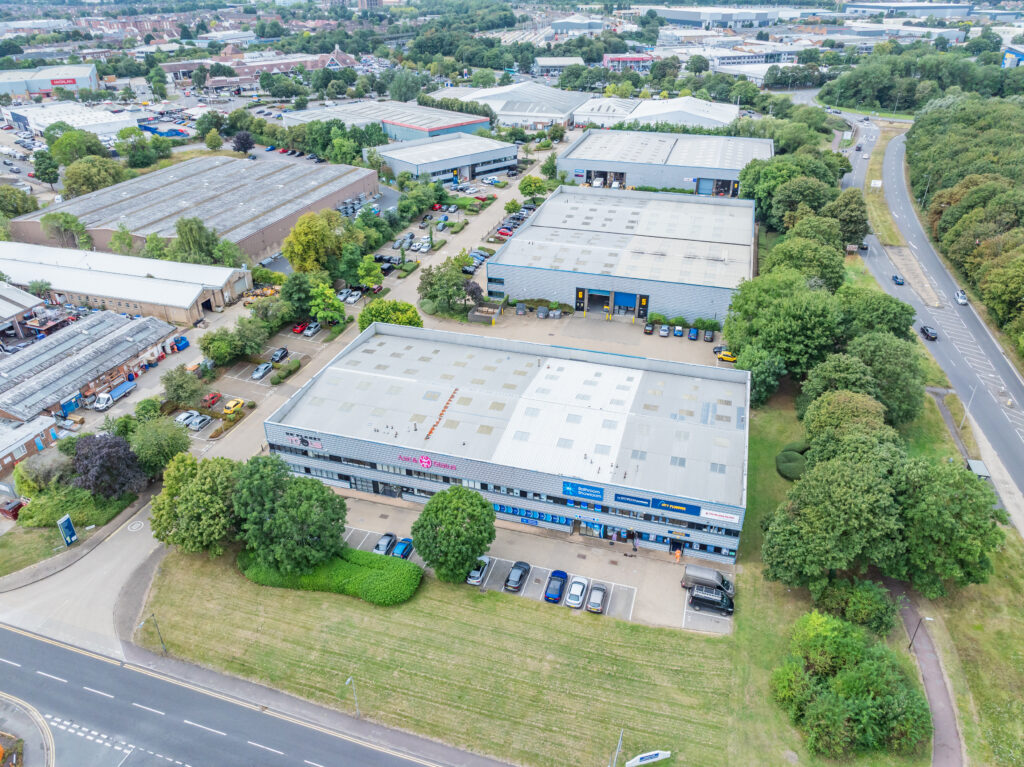
Saxon Park in Milton Keynes was seeded by Space Industrial
We’re always looking at new products and developments. We also have a development team which is active in the living space – so watch this space.
TL: Our focus is on the industrial and logistics markets, however we are always looking for special situations, where the collective Marchmont skill set can be applied to typically large-scale projects.
Why should global investors allocate to real estate this cycle?
CF: With a backdrop of significant market volatility, we remain squarely focused on income generation. In my view, income-oriented strategies in real assets will become ever more attractive as investors seek a reliable hedge against inflation.
What is your trend to watch out for over the rest of this year?
CF: While income focus may not be entirely under the radar, the intensity of that shift is being underestimated. In times of uncertainty, investors are becoming laser-focused on reliable, durable income – and that is quietly reshaping how they assess industrial assets.
“In my view, income-oriented strategies in real assets will become ever more attractive as investors seek a reliable hedge against inflation”
CAM FRASER
The result is a “brown before green” repricing moment for multi-let industrial. As the new-build pipeline stalls, older secondary stock – long overlooked – is being reassessed. Occupational dynamics are tightening, vacancy is falling, and secondary, but well-located assets with strong fundamentals are attracting serious attention simply because there is little else available to lease. Couple that with the scope for affordable refurbishment and rebranding, and the investment case becomes compelling. This is precisely the opportunity Space Industrial is positioning itself to capture.
TL: Perhaps predictably, for me it is all about AI and what opportunities this juggernaut presents in respect of our sector. Whether this is in its search capabilities matching landlords and tenants quicker, smart contracts reducing transaction times or portfolio optimisation through AI modelling tools permitting analysis like never before. We see AI as a huge opportunity to reinvent our use of data and see its utilisation going directly to platform value in the short to medium term.